Solutions · Marketplaces · Brand.com
SKUsight E-Commerce
Amazon, Flipkart, and brand.com stop being three logins. Contribution, availability, and returns share the SKU identity Retail already uses.
E-Commerce
One portal for marketplace and brand.com performance — assortment, pricing, and promo without living in seller central.
E-commerce, growth, and supply teams who currently live in seller / vendor central.
- Compare contribution and returns across platforms on one SKU.
- See listing and content health next to sell-out, not in a content tool.
- Act on inventory and price the same day the marketplace file lands.
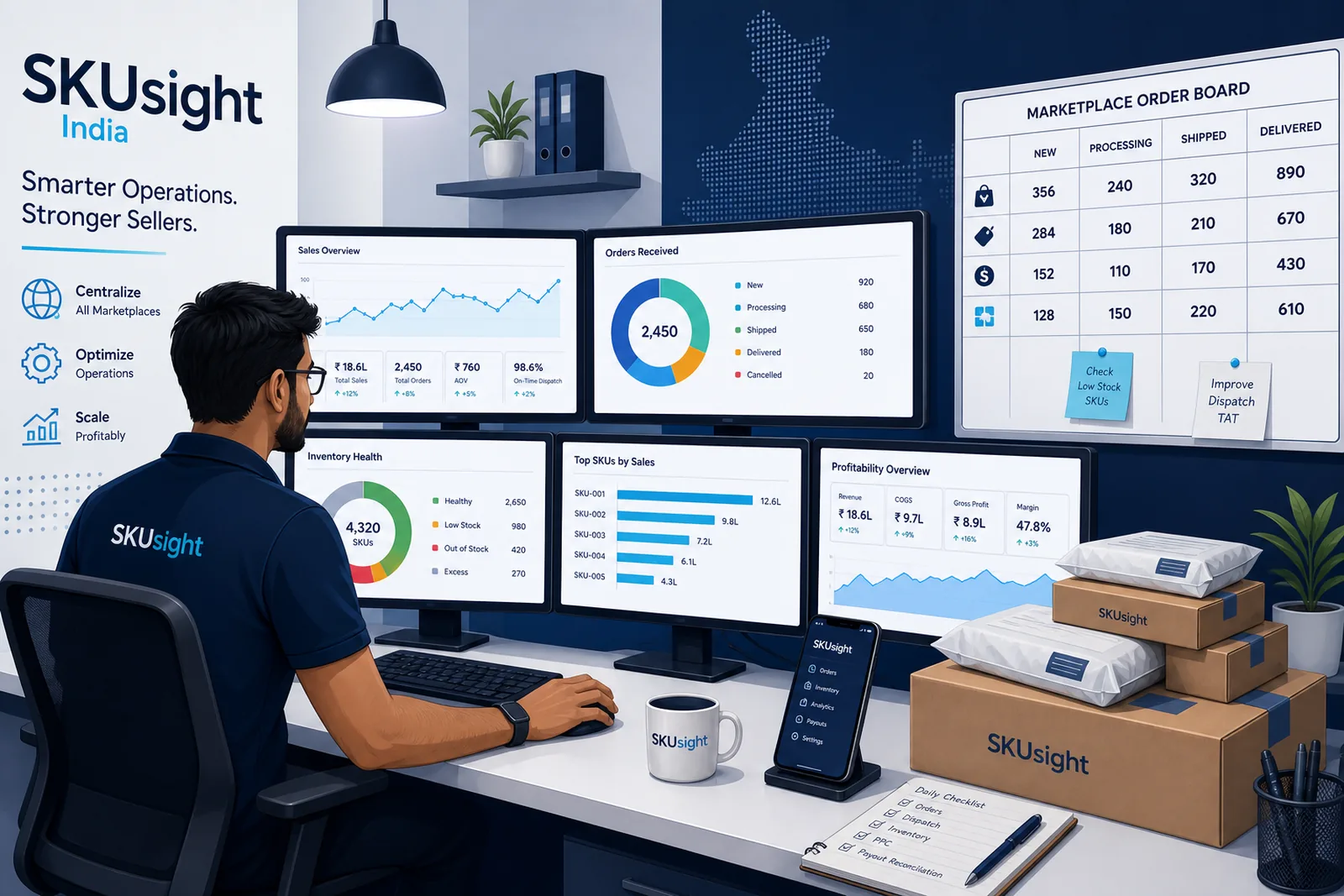
Reports provided
What teams actually open
- Availability / Buy Box health (as provided in the feed)
- Listing and content completeness
- Returns rate by SKU
- Contribution and take-rate view
- Promo vs baseline
- Platform mix
Glossary on this page
Words this module uses
- Sell-out
- GMV or units that left the marketplace or brand.com.
- Listing health
- Whether the pack is findable, complete, and buyable.
- Take rate
- Platform fees against contribution — not a public benchmark.
E-Commerce consolidates marketplace and D2C performance so category and growth teams stop jumping between seller portals.
Compare contribution, availability, and returns across platforms with a shared SKU identity and daily refresh.
Use exceptions and trend views to act on content, pricing, and inventory the same day — not after month-end.
How this differs
Not the same module twice
vs Quick commerce
Marketplaces are daily/weekly files. Quick commerce is a faster availability clock and dark-store inventory.
Open Quick commercevs Retail
E-commerce is platforms and listings. Retail is doors, DCs, and kirana secondary.
Open Retail
30-day data assessment
Connect a subset. See the operating picture. Decide with evidence.
A paid assessment, scoped in writing. If you move to a full contract, the fee is credited back — confirmed commercially, not as a website coupon.
Week 1
Connect
We take a subset of your retailers, marketplaces, distributors, and ERP extracts and land them in DataHub.
Week 2
Health & mapping
SKU matching, pack standardisation, and a Data Health Score so you can see what is trusted — and what is not.
Week 3
Opportunities
Availability, leakage, mix, and coverage exceptions on your own SKUs — the operating picture your teams will actually use.
Week 4
Insights & executive report
Diagnostic and predictive framing, plus a leadership pack. If you convert to a full contract, the assessment fee is credited back — in writing.